
Growing Old as a Woman in India

This post is part of Blogchatter’s A2Z Challenge. G is for Growing Old as a Woman in India.
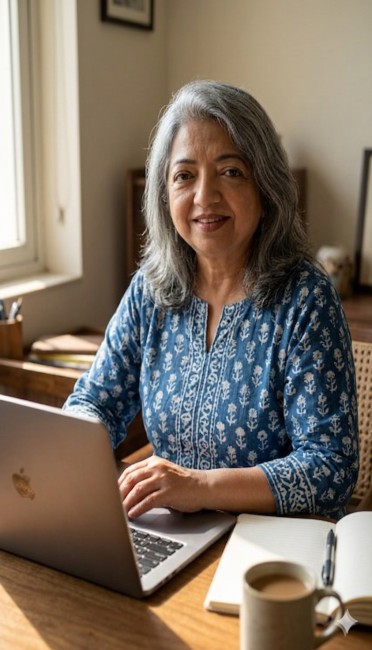
I turned 62 this year. And honestly, I feel better in some ways than I did at 42. I know myself now, and I know what I want. I have stopped apologising for both. But Growing Old as a Woman in India also means noticing things. Gaps in the pavement and gaps in policy. Silence where there should be conversation.
This is not a complaint. Think of it as a gentle nudge from someone living this chapter, who wants it to be easier for all of us.
The Pavement Problem
Start small. Literally.
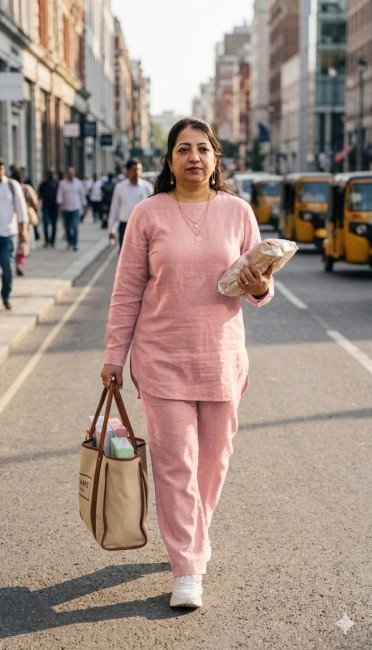
The footpaths everywhere are an obstacle course. Broken tiles, parked scooters, zero ramps and of course, hawkers. A young person navigates them without thinking. I think about every step.
Then add a bus with no handrail, a clinic on the third floor with no lift, and a hospital registration counter that requires standing in a queue for forty minutes. Growing older in India should not mean staying indoors because stepping out is a risk. Public spaces need to catch up with the people using them.
The Money Conversation Nobody Has
Financial independence in old age changes everything. Most families do not discuss it until there is a crisis.
Many Indian women my age never had bank accounts in their own names for years. Many still do not manage their own finances. I built my career late, after loss forced my hand, and I am grateful every single day that I did. But no woman should need a tragedy to make her financially visible.
Pension access for women who worked in informal or domestic roles does not exist in any meaningful form. A woman who spent forty years managing a home and raising children has no financial safety net of her own unless her family provides one. That is not dignity. That is dependence dressed up as tradition.
Without money of her own, an older woman cannot choose her doctor, her city, her living situation, or even her diet. She cannot say no. Financial independence is not a luxury for women in the second half. It is the foundation on which everything else rests.
Dialogues about Mental Health
Depression in older women in India is one of the most invisible health crises we have. It is not discussed at the dinner table nor at the doctor’s clinic. It does not show up on a prescription unless someone is perceptive enough to look for it. Most of the time, nobody looks.
I have seen this up close. Women who are tired all the time, who have lost interest in food and conversation, who cry without knowing why — and the response from family is “she is getting older” or “she has always been like this.” The woman herself does not name it. She has not been given the language or the permission to name it.
And this is not just happening in rural households or among women with no education. It is happening in cities. Among women who have read books, raised children and run homes with quiet efficiency for decades. Mental health remains a taboo even among the educated. Even among us.
The stigma is layered. Admitting depression feels like admitting weakness. Seeking help feels like burdening someone. And so women carry it alone, folding it into the daily routine, getting on with things because that is what they have always done.
What we need is awareness campaigns that speak directly to older women in their own language. We need general physicians trained to screen for depression as routinely as they check blood pressure. We need families to understand that sadness that does not lift is not a personality trait. It is a medical condition. It is treatable. And no woman should have to wait until she is completely hollowed out before someone notices.
What Geriatric Care in India Is Actually Missing
Here is where I want to be specific, because vague concern changes nothing.
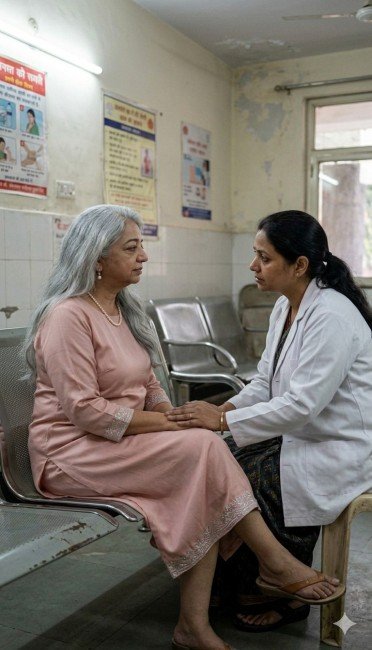
India has very few trained geriatricians. Most cities, even large ones, do not have dedicated geriatric outpatient departments in government hospitals. When an older person walks into a clinic, they are typically seen by a general physician who treats the presenting symptom but misses the larger picture. Nobody looks at the full medication list or asks about sleep, mood, or memory. Nobody connects the dots.
This is what is missing, and it is a long list:
Trained geriatric specialists in every district hospital, not just in private super-speciality chains that charge accordingly.
Polypharmacy reviews mean a doctor who actually sits down and examines every tablet a senior is taking. Many older patients in India are on eight to twelve medications prescribed by different specialists who never speak to each other. The interactions between those medicines cause falls, confusion, and hospitalisation, but nobody links them back to the real cause.
Mental health screening should be a routine, not an afterthought. Depression in older adults is widely underreported in India because it is mistaken for just old age. Loneliness, grief, loss of purpose — these are clinical concerns, not character flaws.
Home-based care for those who cannot travel. A 78-year-old woman with arthritis should not have to take an auto to a hospital for a routine check. Trained visiting nurses and physiotherapists need to be part of government primary healthcare, not a luxury sold by private agencies.
Rehabilitation support after illness. A stroke, a hip fracture, a major surgery — recovery in India largely depends on family availability and private resources. There is almost no structured, affordable post-hospitalisation rehabilitation outside of expensive private centres.
Nutritional counselling for older adults. Dietary needs change significantly after sixty. Most senior citizens in India receive no guidance on this unless they can afford a private nutritionist.
Dementia care and caregiver support. Dementia is not rare. It is massively underdiagnosed because families either do not recognise it or feel ashamed. There are almost no public support systems for families caring for a person with dementia at home.
Ageism Disguised as Affection
Sometimes the hardest gap is not the missing ramp. It is the kindly-meant dismissal.
“You won’t understand this app, Aunty.” “At your age, why do you need to travel alone?” “Just rest, you have done enough.”
Done enough? I am 62, not finished.
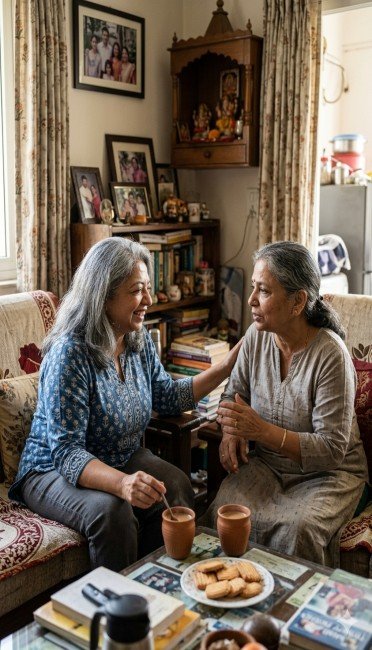
Growing older in India often means being treated as a burden before you have asked for a single thing. I know women in my circle who go entire days without a real conversation. Not because they are unfriendly. Because the family has moved cities, the neighbour is busy, and nobody thought to check. Loneliness in older adults is not a mood. It is a health condition. And we are not treating it as one.
What Needs to Change, Clearly
Since I have gone this far, let me be direct about what needs to happen.
For healthcare: Geriatric departments in every government district hospital. Mandatory polypharmacy reviews. Mental health screening is included in routine senior checkups. Subsidised home visits by trained healthcare workers for mobility-limited seniors. Affordable rehabilitation centres in every city, not just metros.
For infrastructure: Ramps and lifts in all public buildings, hospitals, and transport. Senior-friendly counters in banks, post offices, and government offices. Safe, even pavements in residential neighbourhoods.
For finances: Pension coverage extended to women who worked in informal or domestic roles. Financial literacy programmes designed specifically for older women. Legal aid cells in every district to help seniors understand their rights under the existing law.
For the community: Trained neighbourhood volunteers for wellness checks. Local dementia support groups. Intergenerational programmes in schools and residential complexes that bring older adults and children together, because isolation is not solved by policy alone.
What Is Actually Getting Better
Let me not end on a list of problems without the good news, because there is some.
More women my age are working, writing, running businesses, and refusing to stay invisible. The conversation around aging, menopause, and elder rights is finally entering public space. Senior living communities in cities like Hyderabad and Chennai are beginning to rethink what aging with dignity looks like. And women like me are talking. Loudly. On blogs.
The Change We Deserve
Growing older in India is not the problem. The gaps around us are.
We have lived long, learned much, and lost enough to know what truly matters. We deserve public spaces we can move through safely, doctors who see the whole person, finances we control, and communities that remember to knock on our doors.
The second half still has plenty to say. Let us make sure the systems around us are finally ready to listen.
This post is part of Blogchatter’s A2Z Challenge.
The Theme of my A2Z series is The Second Half
Find all my A2Z Blogs Below






 @wordsmithkaur
 @wordsmithkaur



This is a wonderfully calm, clear, and detailed post that highlights the issues and makes suggestions to tackle them. Terrific! My sister works in aged care in Australia, and it feels so structured and streamlined!
That’s true, Srivalli. I have written a couple of posts on Geriartic care in Australia.Wish we had something like that.
Agree with everything you’ve written! There’s also very little information on perimenopause/menopause and how to deal with the associated issues. Things are changing slowly, and I suppose we should be glad about that!
There is lots of information at your finger tips, Fabida. In my time we had to work on instinct.