

Judgement: What I Stopped Carrying

J is for Judgement for Blogchatter’s A2Z challenge-J for Judgement: What I Stopped Carrying.I was judgmental once. Freely, casually, without guilt. I judged people’s choices. Their partners. Their bodies. The way they dressed and the things they said. I told myself it was just an opinion. Just observation.
Everyone does it, I reasoned. And they do.
But after I lost my husband, something shifted. Suddenly, I was on the other side.
When Judgement Turned Its Face Towards Me
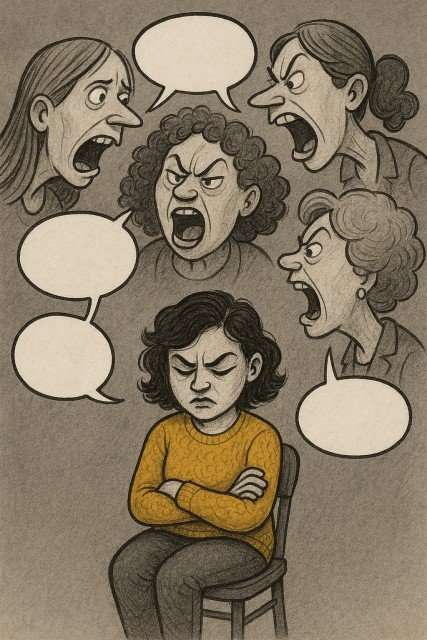
I was not prepared for what followed his death. Not the grief that I had braced for. What I had not braced for was the scrutiny.
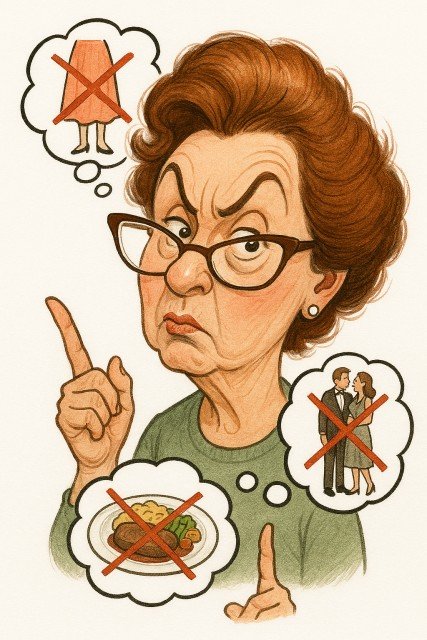
Society, I discovered, has a very clear idea of what a widow should look like. How should she dress? What colours is she permitted to wear? How sad she must appear, and for how long.
Twenty years ago, the rules were rigid. I was expected to look the part – muted, withdrawn, grief-worn. But that was never who I was. I am genial. I am an extrovert. A room full of people energises me. Silence, especially the enforced kind, drains me.
So I went into a shell. Not because I chose to. Because I had to.
I restricted myself to work and home. Socially, I became careful. Guarded. And still, the questions came – directly to my face, without apology.
“How do you live alone? Why don’t you go live with your children,why did you let your son marry a Mexican? Why aren’t you getting your daughter married? Force her if you have to. You are not fulfilling the duties of a mother.”
These were not questions. They were verdicts wearing question marks as costumes.
The Moment I Said Enough
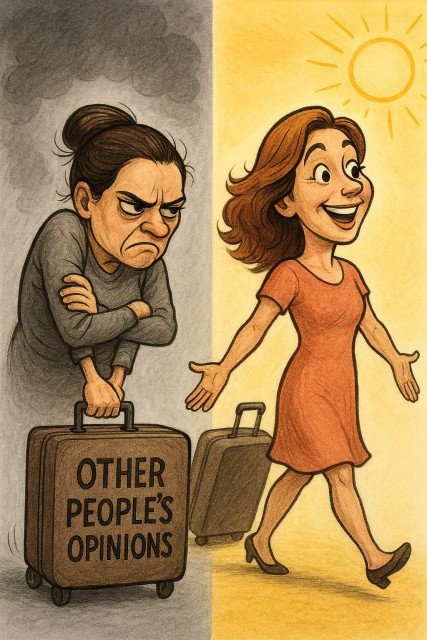
After my son passed, something in me settled into a quiet, firm resolve. I had carried enough. Other people’s discomfort. Their outdated templates. Their need for me to be smaller, sadder, simpler than I was. I decided I would no longer carry it.
I moved to Hyderabad.
Here, I dress as I please. No eyes follow me down the street. I do not look over my shoulder. My new friends took me into their fold without conditions. They accepted me as I arrived: whole, complex, still becoming.
For the first time in years, I could breathe.
What I Learned About Judgement
Being judged so harshly taught me to examine my own judgments with honesty. I had done the same to others. Perhaps not as cruelly. But I had done it.
So here is what I know now, after standing on both sides.
Do this:
- Pause before you judge someone’s choice. Ask yourself: do I know the full story? Almost always, the answer is no.
- Let life humble you. It will, eventually. The things we once judged others for have a quiet way of arriving at our own doorsteps.
- Extend the grace you would want for yourself. When people stared at what I wore, I understood what it costs a person to be seen and misread at the same time.
- Notice when silence is a kindness. Not every thought deserves a voice. Holding back an unkind opinion is its own form of strength.
- Separate the person from the choice. You can find something puzzling without making the person wrong for it. Curiosity costs less than contempt.
- Seek out people who accept you as you are. That kind of acceptance teaches you, gradually, how to offer it to others.
Don’t do this:
- Measure someone’s grief by how they wear it. Grief has no uniform. A person in bright colours can be in the deepest mourning of her life.
- Mistake social norms for moral truths. Society’s rulebook is written by whoever has held power longest. Many of its pages are overdue for revision.
- Ask questions that are really verdicts in disguise. “Why don’t you go live with your children?” is not a question. It is a judgment with a question mark at the end.
- Confuse your comfort with their duty. When someone’s choices unsettle you, that feeling is about you — not a failing on their part.
- Carry other people’s opinions longer than you must. It took me years to set that luggage down. The moment I did, I could finally breathe freely.
- Shrink yourself to make others comfortable. Suppressing who you are is not a virtue. It is erasure.

What Stays, What Goes
I still form opinions. I am human and I always will. But now, I hold them more lightly. I ask more questions and make fewer pronouncements. I try, more often than before, to stay curious about a person rather than conclusive about them.
And the judgments others aimed at me? Those I have set down, one by one, like stones I was never meant to carry this far.
The second half is the perfect time to audit what you are hauling. Some things deserve to come with you. Wisdom, yes. Love, always. But other people’s verdicts about your life? Leave those at the door.
You will walk lighter. I promise.
This post is part of Blogchatter’s A2Z Challenge.
The Theme of my A2Z series is The Second Half
Find all my A2Z Blogs Below
- Aging Well Versus Looking Young
- Being Needed Less: The adjustment no one talks about
- Clutter of The Heart
- Doing Less Without Feeling Guilty
- Evolving Friendships in the Second Half
- Feeding Your Own Soul
- Growing Old as a Woman in India
- Humour That Saved Me
- Women’s Intuition: My 7th Sense
- Judgement: What I stopped carrying





 @wordsmithkaur
 @wordsmithkaur



Ah Harjeet Ji, this was such a moving blog post. When I was in my thirties, I too was guilty of passing snap judgements, but now, in the wrong side of the 40s, I , like you, try to delve deeper. Not make snap judgements. I realised it is better for my peace of mind too!
Thanks Harshita…Life becomes easy once you let go of all judgements.Live and Let Live is the best way.
Our experiences teach a lot about human behaviour. You have so rightly summed it up, Harjeet.
Thanks Reubenna.I learnt from life only. Once you stop judging the weight lefts and life is easier.
It is so easy to judge others, and real growth happens when we recognize our patterns and are able to change them. I admire the way you took control of your life, and chose your happiness over the judgement of society. Kudos!
Thank you, Ankita.It wasnt easy but I am glad I can now let go and not let it ruin my peace of mind.
It takes a lot of self-awareness and courage to admit that we judge, and I really appreciate your honesty. Yes we all do but life gently teaches us to be kinder, to pause, and to empathize with people and situations. I genuinely loved your post and the way it talks about so many honest and meaningful reflections. The idea of understanding what stays and what should be left behind definitely comes from your lived experience and that makes it even more powerful. Your words carry the wisdom that only life can teach and it is worth pausing and noting
Thanks Pinkii…faced a lot in my life and if there was no courage I would have just fallen to the ground. I believe that we should admit our flaws and tom tom what we are proud of.