Overcoming the Inner Critic: Finding Confidence After 60
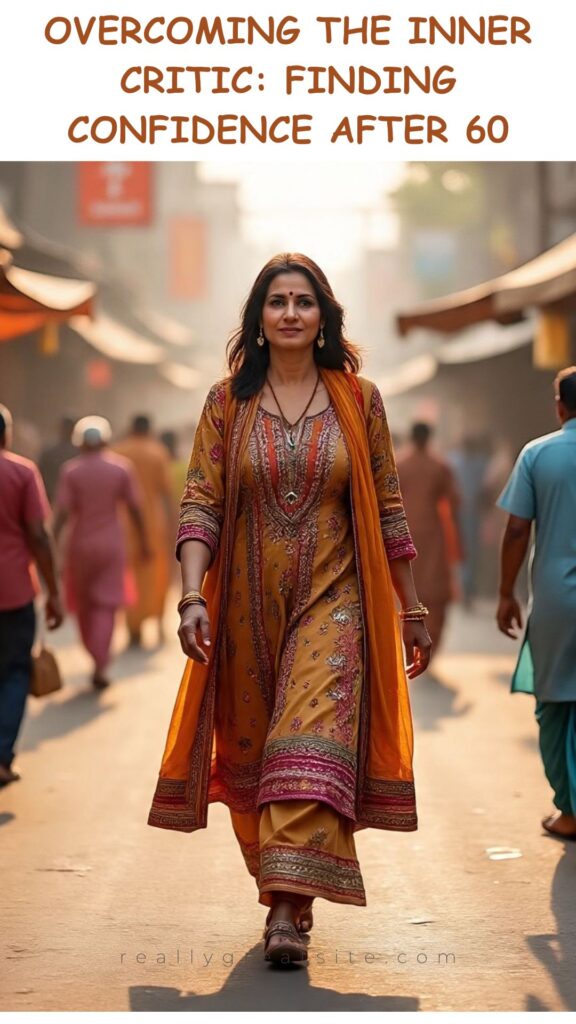
Overcoming the Inner Critic: Finding Confidence After 60 did not happen through rebellion. It unfolded slowly, through responsibility, solitude, and lived experience. For decades, I carried a quiet internal voice that guided my behaviour more firmly than I realised.
I call her Miss Proper.
She was not harsh. She did not shout. Instead, she whispered instructions about restraint, dignity, and how a “good woman” should conduct herself. She believed deeply in maryada. She reminded me, often, of log kya kahenge. According to her, visibility invited scrutiny, and scrutiny invited trouble. For a long time, I listened.
The Making of Miss Proper

In my younger years, I rarely challenged expectations. Harmony mattered more than assertion. Silence felt safer than disagreement. Compliance appeared graceful. Because life followed a familiar rhythm, I never had to examine those instincts closely. Then, circumstances changed abruptly.
Suddenly, I was responsible for decisions I had never made myself. I had children to raise, finances to manage, and practical matters to handle without guidance. There was no gradual transition into independence. It arrived all at once.
Miss Proper grew anxious during that period. She advised caution in everything. Dress modestly. Speak softly. Stay indoors. Avoid attention. According to her, strength meant endurance without display.
However, real life required something else. Providing stability demanded confidence. Work demanded presence. Decision-making required clarity. Each challenge I met contradicted her warnings. Slowly, evidence began to outweigh fear.
When Conditioning Meets Experience

Years passed. I built competence where once there had been hesitation. I created a structure where there had been uncertainty. Gradually, I realised that capability does not announce itself loudly. It reveals itself through repetition.
Later, when I moved cities and stepped into my sixties, distance offered perspective. I observed how often I filtered myself. I measured tone, moderated laughter, and softened opinions. All of it traced back to one persistent concern: what would people say?
Then a simple truth surfaced. People speak regardless. No catastrophe followed when I chose colour over caution. No moral code was shattered when I expressed myself freely. Instead, life expanded. I formed friendships across generations and worked confidently. I participated fully. The world did not withdraw its approval; in many ways, it offered more.
At some point, the question shifted from log kya kahenge to something far simpler: if they will speak anyway, sannu kee?
Redefining Authority

Overcoming the inner critic did not mean silencing her entirely. Miss Proper still visits. She reminds me of old rules, inherited anxieties, and cultural expectations. Yet she no longer governs my choices.
Now, I acknowledge her and move forward anyway.
Confidence after sixty feels different from youthful boldness. It is steadier. It rests on lived proof. I no longer confuse invisibility with virtue. I no longer shrink to make others comfortable. Instead, I choose authenticity without performance.
The greatest shift has been internal. Approval is no longer my compass. Experience is. Resilience is. Self-trust is.
Miss Proper once ensured survival. For that, I remain grateful. But survival is not the same as living fully. Today, I allow myself visibility, voice, and presence without apology.
Overcoming the inner critic is not about becoming louder. It is about becoming clearer. And clarity, I have learned, is its own quiet power.







 @wordsmithkaur
 @wordsmithkaur