
The Unseen Work of Women

Nobody gave her a job description or handed her a contract. Nobody reviewed her performance or gave her a raise. Yet, every single day, she showed up. Quietly. Without applause. Without overtime pay. This post explores the unseen work of women, the kind that never makes it to a resume. It runs silently in the background, like a tab nobody remembers to close.

What Is the Unseen Work of Women?
It is not just cooking and cleaning. That would be easier to measure.
The unseen work of women includes everything else. It is a reminder that the school fee is due, with the child who prefers the green tiffin box in mind. It is tracking a parent’s health check-up or smiling through exhaustion at family gatherings.
More importantly, it is managing emotions in a room full of people while ignoring your own.
This is not small work. It is constant, invisible, and deeply demanding.
What the Data Says About the Unseen Work of Women
We now have hard data to support what women always knew.
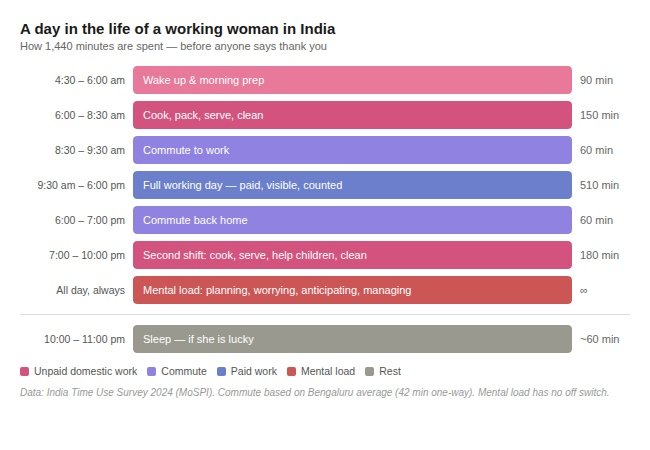
India’s 2024 Time Use Survey shows that women spend 289 minutes daily on unpaid domestic work. Men spend only 88 minutes.
That is a gap of more than three and a half hours every day.
Worse, the gap is not shrinking. Women spent 299 minutes in 2019, while men’s contribution dropped from 97 to 88 minutes.
So yes, women are still doing more. In some ways, men are doing less.
This is not equality. It is an imbalance.
The Double Burden: Work Outside and Inside the Home
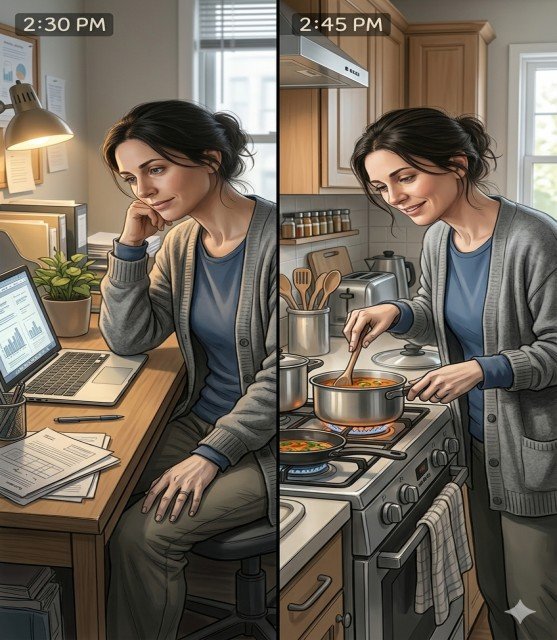
The unseen work of women does not stop at home.
Many women also work full-time jobs. Then comes the commute. In cities like Bengaluru, one-way travel averages over 40 minutes.
That means nearly 90 minutes on the road every day.
After returning home, the second shift begins. Cooking dinner. Helping children. Checking on elders. Finishing chores.
In states like Telangana and Tamil Nadu, over 80% of employed women still handle domestic work.
As a result, many women reduce work hours or leave careers due to burnout.
They go to work. Then they come home to more work. Yet, their careers are still seen as optional.
Where Are the Men?
The numbers tell a stark story.
Only about 30% of men in India participate in unpaid domestic work. Even fewer take part in caregiving.
Many say they want to help. However, some admit they lack confidence using basic household tools.
That gap is not just practical. It reflects conditioning.
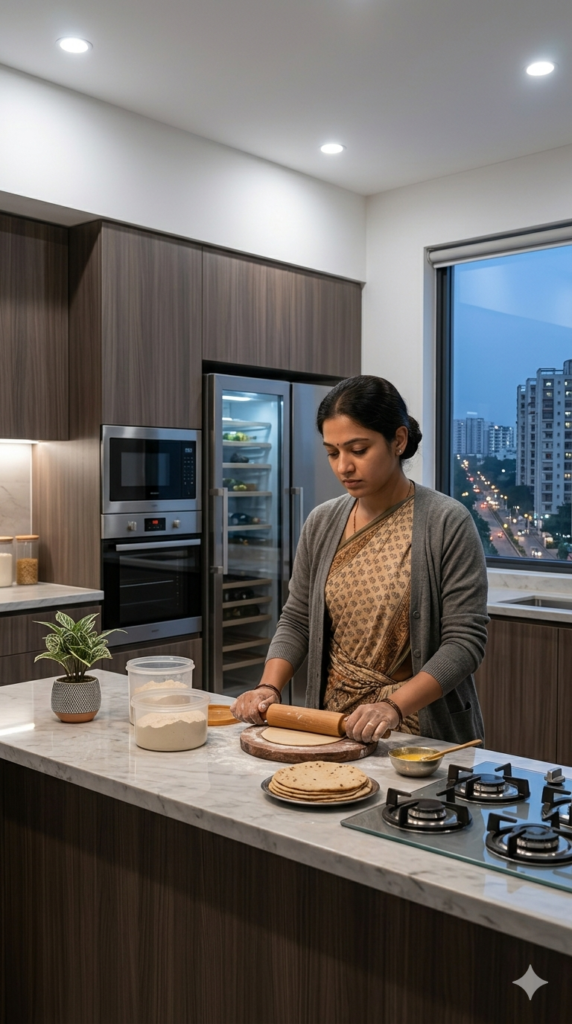
Meanwhile, women manage homes, finances, children, and careers. They still ask, “Have you eaten?”
This is not a gap. It is a deep canyon.

The Mental Load Behind the Unseen Work of Women
The physical effort is only half the burden.
The mental load is heavier. It includes planning, anticipating, and remembering everything.
It is thinking ahead before problems arise, solving issues before they are spoken.
Research links this invisible labour to burnout in women. Constant mental pressure pushes the brain beyond its capacity.
This is not laziness. It is exhaustion from carrying too much for too long.
I Know This Work. I Have Lived It.
Been that woman, myself. I remembered birthdays, anniversaries, allergies, and deadlines, managed festivals and grief at the same time. I cooked through some of the hardest years of my life.
Not because I had no choice. But because feeding others gave me balance when life felt uncertain.
Nobody noticed. That was expected.
The truth is simple. The unseen work becomes visible only when it stops.
The Second Half Brings Clarity
In the second half of life, something shifts.
You begin to count the cost. Not with anger, but with clarity.
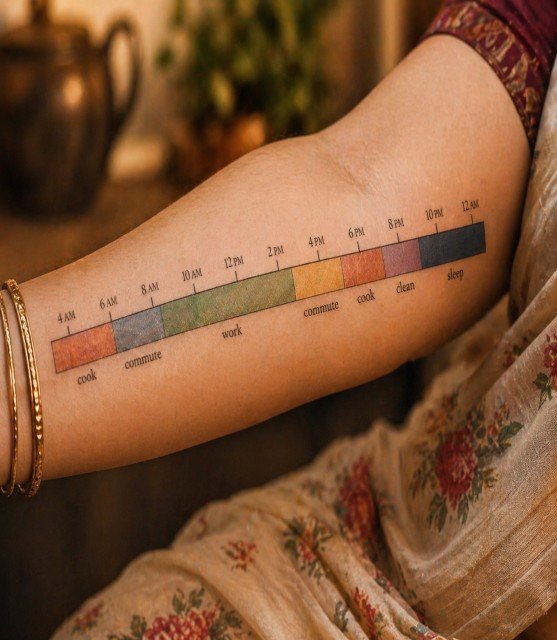
You see the years spent caring for others, notice the dreams you postponed. You recognise the rest, you never allowed yourself.
Then a question arises: what about me?
At first, it feels selfish. Later, it feels necessary. Eventually, it feels honest.
Because the unseen work of women will continue. But the woman doing it cannot remain unseen.\
What Must Change Now
The unseen work may not disappear. However, how you carry it can change.
You start saying no to what drains you, and ask for help without guilt. Make your effort visible.
You understand that rest is not laziness. Boundaries are not selfish. Being seen is not too much.
For younger women, start early. Name your work. Share the load. Do not wait for later.
For women in the second half, it is not too late. A lifetime of care deserves recognition.
Start with yourself.
You have held the world together for others. Now, it is time someone sees yours.
This post is part of Blogchatter’s A2Z Challenge.
The Theme of my A2Z series is The Second Half
Find all my A2Z Blogs Below
- Aging Well Versus Looking Young
- Being Needed Less: The adjustment no one talks about
- Clutter of The Heart
- Doing Less Without Feeling Guilty
- Evolving Friendships in the Second Half
- Feeding Your Own Soul
- Growing Old as a Woman in India
- Humour That Saved Me
- Women’s Intuition: My 7th Sense
- Judgement: What I stopped carrying
- Kitchen Hacks: 25 Tried & Tested
- Lifelong Learning: From Letters to AI Prompts
- Matka Magic
- Neighbours and the quiet joy
- Old Photo Albums Versus Digital Photos
- Pickle Jars & Indian Achar
- Questioning Social Beliefs
- Relationships
- Social Rules Nobody warned you about
- Travel After 50






 @wordsmithkaur
 @wordsmithkaur