

Questioning Societal Beliefs That No Longer Fit Women
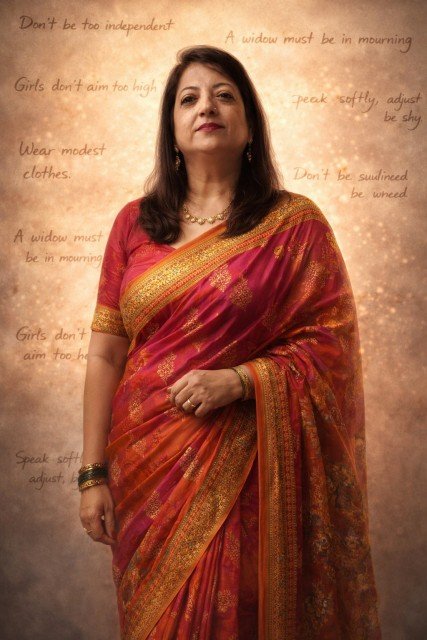
Q is for Questioning Societal Beliefs That No Longer Fit Women. Someone once told me, with great confidence and zero irony, that a good woman does not question. She adjusts, endures. She shrinks herself to fit whatever box the room assigns her.
For years, I tried to be that woman.
The perfect wife. The devoted mother. The ideal daughter-in-law. Every rule followed, every expectation met, every boundary respected. Carefully. Quietly. Without complaint.
And still, it was not enough.
Eventually, life hit hard enough and often enough that questioning long-held beliefs stopped being rebellion. It became survival. It became the only way to remain alive as a person, not just exist as one.
Welcome to my list. Every word comes from lived experience.

The Ceiling They Fitted Before We Could Speak
From birth, the rulebook arrives. Girls cook, manage homes. Girls do not aim too high or speak too loudly. Capability comes with a ceiling, installed early, before a girl is old enough to raise her hand and ask who put it there.
Nobody asks. That, of course, is rather the point.
For years, I lived under that ceiling and followed every instruction dutifully. Then, much later, I realised it was not load-bearing. So I pushed through it completely. There was no graceful way to do it. There was only freedom waiting on the other side.
Turns out, freedom was worth the mess.
Forty Days That Nearly Broke Me
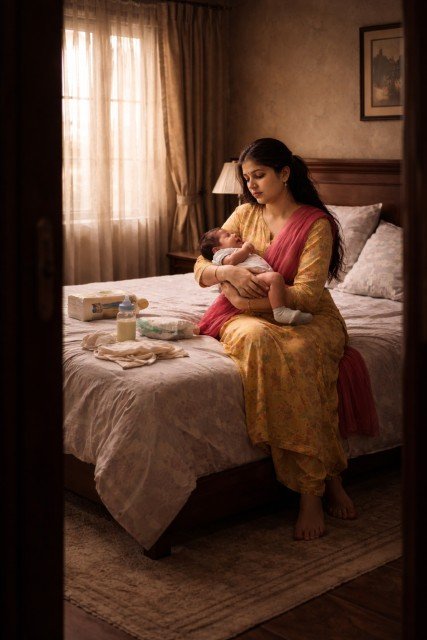
After childbirth, families expect a new mother to stay confined indoors for forty days. They call it rest and present it warmly as care. In reality, it felt like a very comfortable prison with very good intentions.
Postnatal depression struck after my first child. Nobody recognised it. Nobody named it or spoke about it. Instead, the expectation stayed simple: endure, smile, and feel grateful. Consequently, I spent six months struggling silently before anyone thought to get me help.
Even today, this practice continues across Indian homes. Families enforce it lovingly, yet rarely pause to question its impact on a woman’s mind. Sometimes, what we call tradition deserves an honest, uncomfortable conversation.
The Woman Who Handed Me the Rulebook
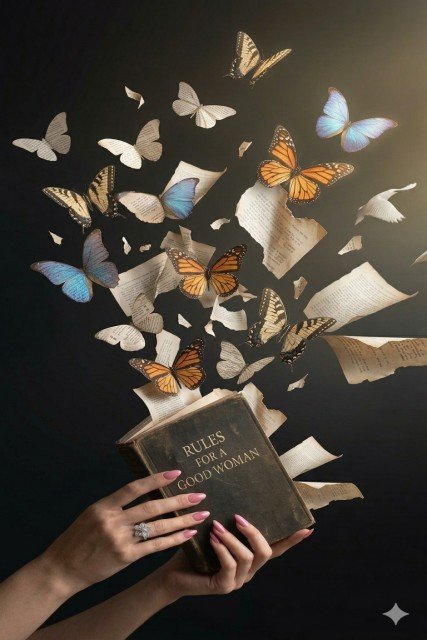
A woman in the family turned to me and asked, “Did you kill him? You must have fought with him last night!” while he was still fighting for his life.
Let that sit for a moment.
When he passed away, the same woman said: “Think that you died with him. Your life is over. You are alive only for your children“.
Charged, found guilty and sentenced. No trial.
I was forty years old.
This verdict did not arrive from society at large. It came from within the family. From a woman. That detail matters because it tells you exactly how deeply these beliefs run. Patriarchy does not only live in men. It recruits women to enforce it on each other with remarkable efficiency. Free of charge. No accountability required.
When Following Every Rule Still Was Not Enough
I had done everything right. Living exactly as expected. Yet, in my most vulnerable moment, people reduced me to a role: a widow with no identity beyond her loss.
They expected withdrawal. They expected me to give up colour, joy, laughter, and self-expression on a schedule they had quietly decided.
Meanwhile, a widower in the same family remarried within months. Because a man with a child cannot manage alone. He needs companionship. He deserves happiness. A woman with children? Her life, apparently, is over before she is even given the option to grieve properly.
The contrast was not subtle. It was absolute.
Friends disappeared. Family created distance. At every workplace I entered, men saw a single woman as an easy target. In their thinking, a woman without a man is available, desperate, and approachable. So they made passes. Repeatedly. The absence of someone to protect me seemed to embolden them considerably.
Every single time, I stood my ground. Because my self-respect was never part of anyone’s rulebook but mine.
After moving to Hyderabad, something shifted. That city did not change my circumstances. Instead, it changed my courage. That is where I began to question. That is precisely where I began to reclaim myself.
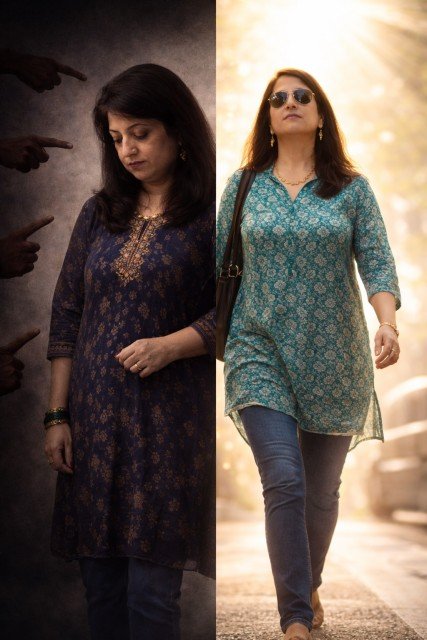
Still Happening in 2026. I checked.
- A woman’s clothing is still used to justify crimes against her. Society shifts blame onto what she wore, where she went, and what time she returned. Women across India face violence regardless of clothing, location, or hour. The problem has never been the woman. It has always been the mindset that excuses the crime and then politely looks away.
- A man’s midnight return home is unremarkable. A woman doing the same becomes neighbourhood gossip. People discuss her character rather than her safety. Same action, very different consequences, and nobody seems to find that strange.
- Daughters are still treated as financial liabilities in many homes, despite laws that say otherwise. Dowry remains illegal, and openly celebrated simultaneously. My daughter has been my pillar of strength through everything. Today, daughters across India support their parents emotionally and financially in ways no rulebook ever anticipated. Perhaps our beliefs ought to catch up with what is actually happening in our own homes.
Questioning Societal Beliefs That Do Not Fit Women! These are not old stories from another era. They are current, documented, and happening right now.
- Menstruation is still treated as something shameful and impure in 2026. Families impose restrictions that quietly shape a girl’s relationship with her own body. A natural biological process becomes a source of embarrassment that follows her quietly into adulthood.
- When a woman states her opinion firmly, people call her difficult and too much. When a man uses identical words in an identical tone, they call him confident and decisive. Same sentence. Different gender. Entirely different career trajectory.
- Marriage still carries the unspoken expectation that the woman adjusts, adapts, and absorbs. Rarely does anyone place the same expectation on the man. People speak about equality loudly and practise it very selectively.
These are not isolated incidents. They are patterns. And patterns deserve to be questioned out loud, without apology.
Sixty Is Not a Full Stop
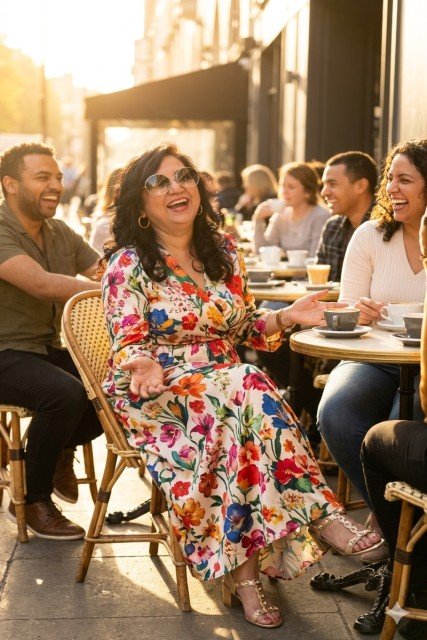
Somewhere along the way, the world decided that sixty is an ending. That ambition softens. That desire fades. That a woman past sixty should step back, slow down, and accept that her turn is over.
Nobody told me. Honestly, I am glad they did not bother.
Today,, I am a senior citizen who is also beginning again. I started my professional journey at forty, and now I am reshaping my life entirely on my own terms. This phase is not about slowing down. It is about choosing differently: living independently, writing, expressing, and laughing without seeking permission from anyone.
Life does not file a resignation at sixty. Only fear does. And I have indulged fear long enough.
The Only Question Worth Asking
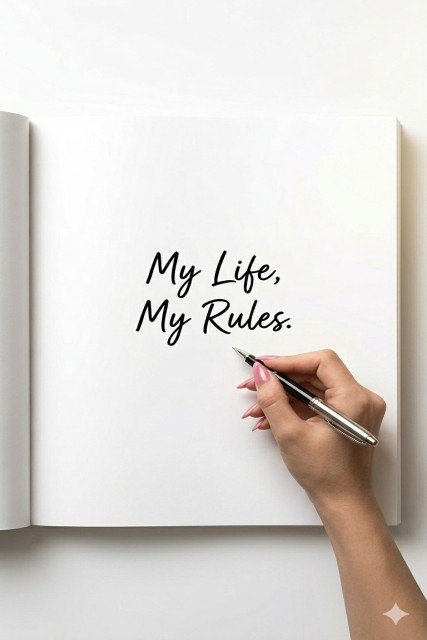
Every belief I followed was handed to me. Not one was consciously chosen. Each arrived gift-wrapped from a system that functions beautifully when women comply, endure, and disappear on schedule.
Questioning is not disrespect. It is not ingratitude or aggression or being too much or awareness. It is a strength. Above all, it is the beginning of the only freedom that actually belongs to you.
So pick up the pen. Write your own rules. Because nobody else has the authority to decide how your story ends.
This post is part of Blogchatter’s A2Z Challenge.
The Theme of my A2Z series is The Second Half
Find all my A2Z Blogs Below
- Aging Well Versus Looking Young
- Being Needed Less: The adjustment no one talks about
- Clutter of The Heart
- Doing Less Without Feeling Guilty
- Evolving Friendships in the Second Half
- Feeding Your Own Soul
- Growing Old as a Woman in India
- Humour That Saved Me
- Women’s Intuition: My 7th Sense
- Judgement: What I stopped carrying
- Kitchen Hacks: 25 Tried & Tested
- Lifelong Learning: From Letters to AI Prompts
- Matka Magic
- Neighbours and the quiet joy
- Old Photo Albums Versus Digital Photos
- Pickle Jars & Indian Achar
- Questioning Social Beliefs
- Relationships



 @wordsmithkaur
 @wordsmithkaur



Life isn’t any easy for a woman in India, in spite of all the empowering the system claims to be implementing. Your post has quite a few poignant moments that hit hard the heart of any thinking man.