
Signs a Bespoke Walnut Dining Table Could Suit Your Home
A bespoke walnut dining table costs more than a standard one. Whether the premium buys anything useful depends on the room it goes into and the household around it.
Your room doesn’t fit standard dimensions
Most mass-produced tables come in a handful of fixed lengths, and the cheapest come in one. That suits a square room with nothing in the way. It fails in rooms with a bay window, a chimney breast alcove, a radiator on the only clear wall, or a walkway that cuts the corner.
Comfortable circulation needs about 90cm of clear floor around the table, measured from its edge to the nearest wall or furniture. A stock size in a non-standard room forces a choice: a table that fits the space but seats too few, or one that seats everyone and blocks the route to the kitchen.
A commission removes that compromise. Length, width, height and leg position are set before the build starts, so legs can move inboard to clear a chair, or a top can narrow to suit a galley-shaped room.
Exact sizing adds to the quote; a table that’s almost right costs floor space every day it’s owned.
Your interior leans on natural warmth
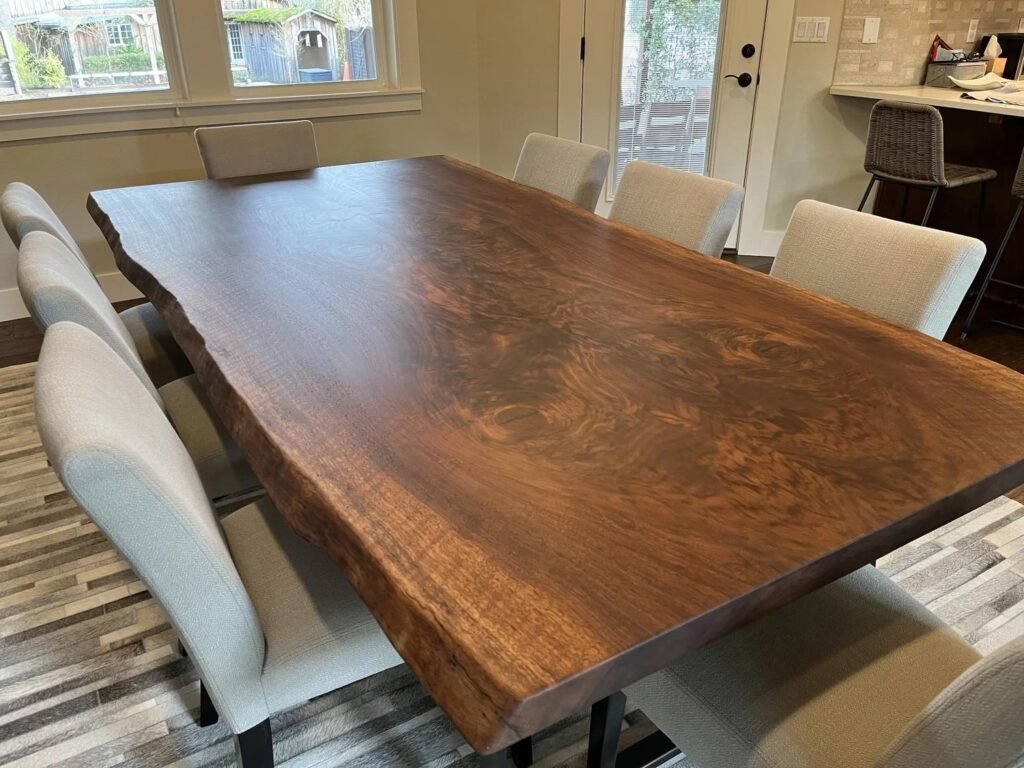
Open-plan spaces and neutral palettes share a weakness: everything blends and nothing holds the eye. Walnut’s dark tone gives a room visual weight. The heartwood runs deep chocolate brown, the sapwood stays pale cream, and a board carrying both gives the surface a contrast that printed laminate can’t copy.
That character suits biophilic schemes, where natural materials do the decorating, and warm minimalism, where one textured piece replaces a roomful of ornaments. It also sits easily in mid-century modern rooms, where walnut tones and tapered legs have been at home since the 1950s.
A live edge top, where the natural curve of the tree becomes the table’s edge, pushes the organic look further. Under daylight the grain shifts in tone as the sun moves, and years of use build a patina, a soft sheen that no factory finish reproduces.
You’re done replacing tables
Replacing a table every few years costs more than the price tags suggest. Before buying again, weigh how long the next one should last and whether it can be repaired when it wears.
Solid walnut works on different economics, but the label alone tells you little. Before buying, ask what timber is used, how the frame is joined, what finish protects the top, and whether the maker offers repairs or refinishing later. Ranges such as the walnut tables from Winchester Furniture Company give you a starting point for those questions.
The second purchase is where a cheap table gets expensive. A solid top can be sanded back and refinished when it’s marked. A table that lasts decades competes directly with the cost of replacing a flimsy one every few years.
The finish is an ongoing cost decision too. Clear oil soaks in and leaves the grain fully visible, but it asks for re-oiling every year or two. Satin lacquer seals the surface and skips that upkeep, though a deep scratch in lacquer is harder to patch invisibly.
You know how you actually sit
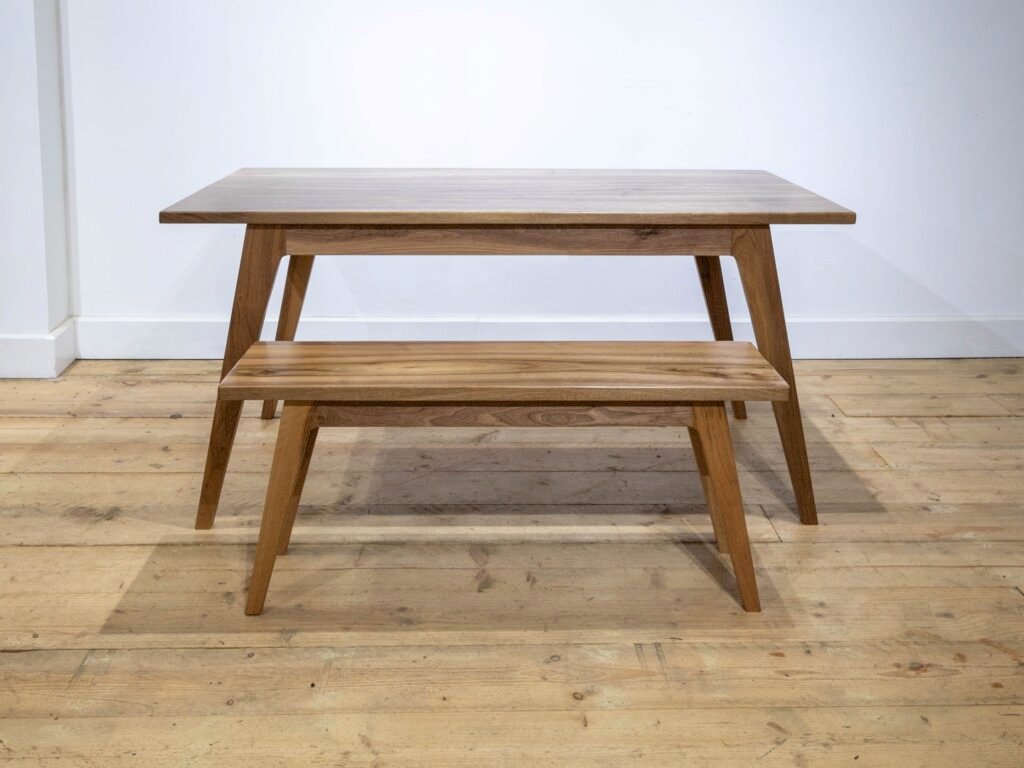
How a household sits should drive the design, and a commission allows for that. A flush railed build, where the underframe sits tight to the top, maximizes legroom and lets chairs tuck fully in. Thick-topped designs with deep rails make a stronger visual statement but can reduce knee space at the same overall height.
Leg placement sets how many chairs fit. Corner legs fix where chairs can go; legs moved inboard, or a pedestal base, free up the long sides for extra seats. Households that host often should size for the crowded evening, when every seat is taken. Standard height suits standard chairs; anything thicker or taller needs measuring against the seats already owned.
You want to know where the wood came from
Traceable timber means the boards come with documented provenance, though that alone doesn’t prove the woodland is managed sustainably. Ask what evidence sits behind the claim: felling records, certification, or a named merchant. A workshop that knows its timber source will usually have a straight answer.
This sign favors buyers who plan to stay put. A commissioned table is heavy and sized to one room, so it suits owners furnishing a room they’ll keep. Renters who move every couple of years get less from it.
If several of these signs fit, the next step costs nothing. Measure the room and mark out 90cm of clearance in masking tape. Live with the outline for a week. The floor will show what size to commission, and whether bespoke is worth its premium at all.





 @wordsmithkaur
 @wordsmithkaur