
How to Host the Ultimate International Candy Tasting Party at Home
Regular candy parties usually involve simply eating a variety of candies, often leading to a sugar rush. However, this type of candy party is organised differently. It is a formal sensory experience where flavours are sequenced, and scorecards, blind rounds, and serious discussions about the tastes are included. Imagine it as you would a wine tasting or a cheese sampling. The candy is the focal point, and the rest of the arrangements highlight its qualities. This manual gives you all the details on How To Host the Ultimate International Candy Tasting Party at Home. From selecting your geographic lineup to shielding your chocolate from fat bloom. Stick to the instructions and your candy-tasting party will definitely be a hit!
Build Your Flavour Runway Before You Buy Anything
The most important decision you make is the order your candies go down in. There’s only the one palate, and once it’s been struck with something as intense as, say, salty liquorice or chilli-tamarind, it just can’t fully rebound in time for more delicate flavours.
The best structure goes from low to high, intensity-wise:
East Asian candy goes first. Japanese botanical candies, lychee gummies, and mochi chews are soft, across the board. Sweetness is low and floral; chew is long. This is what you need up front: something your guests have to concentrate on but that won’t overwhelm.
Western Europe comes next. Fruit pâtes, gummies, and Swiss chocolate are richer and more assertive, but still largely familiar. Hard-boileds with an herbaceous ping, violet or eucalyptus, go here too.
Scandi candy is the deep cut. Here’s the sour foam, the sugared fruit chew, and eventually the salt licorice genre. Salmiakki, the Nordic licorice flavored with ammonium chloride, is the most polarizing candy category in the world. Do not begin with it as your second course. Put it among the endgames of your Scandi section.
Latin American is your last sweetness before the close. The chilli-salt-tamarind combination that defines Mexican candy should be your peak. After a chilli mango pulparindo, there’s nowhere else to go. End your savoury-sweet course on this and then begin the closing-down-the-palate chocolate course.
Source Your Candy Properly, Freshness and Authenticity Matter
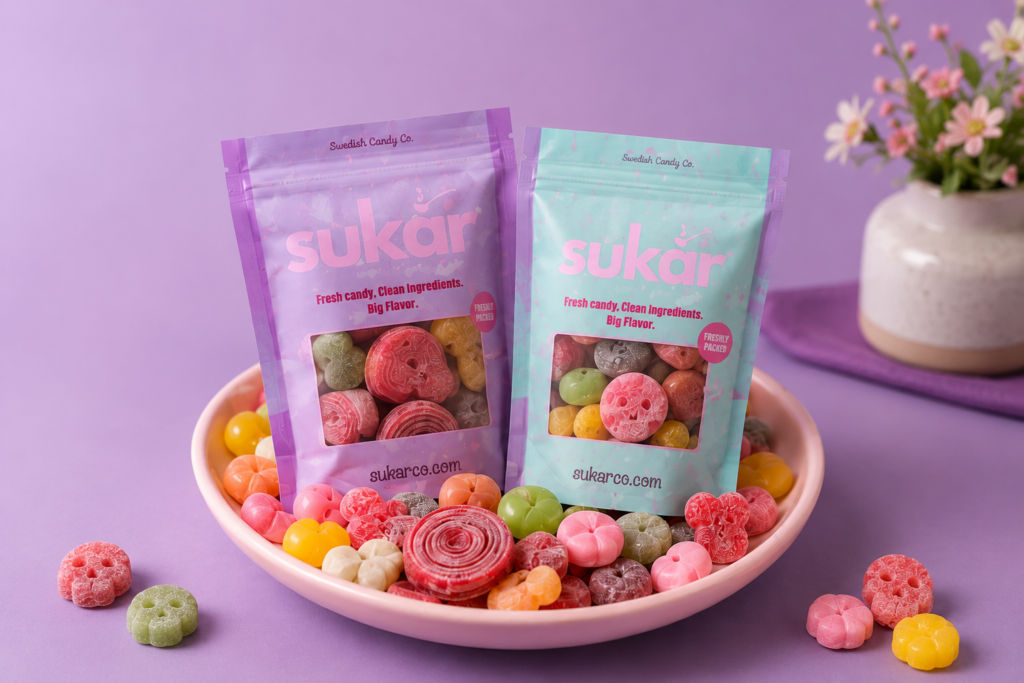
It’s common for international candy to go wrong at the sourcing stage. Most supermarkets carry a narrow range of imports, store them poorly, and do so at a slow enough turnover that freshness is genuinely in question. For Scandinavian selections specifically, you’re better off using a specialist importer. When you buy swedish candy from a dedicated source rather than a generic import shelf, you’re getting product that hasn’t been sitting in a warehouse for six months and hasn’t been exposed to the temperature swings that destroy sugar-dusted gummies.
Authentic Scandinavian candy uses natural colorants, beetroot concentrate, spirulina, carrot extract, instead of the synthetic dyes common in the domestic market. That’s not just a dietary difference; it actually changes the flavor, giving the candy a slightly more complex, less one-dimensional sweetness. European Union regulations restrict or ban several artificial dyes that appear routinely in domestic (US) formulations, including titanium dioxide and a range of azo dyes.
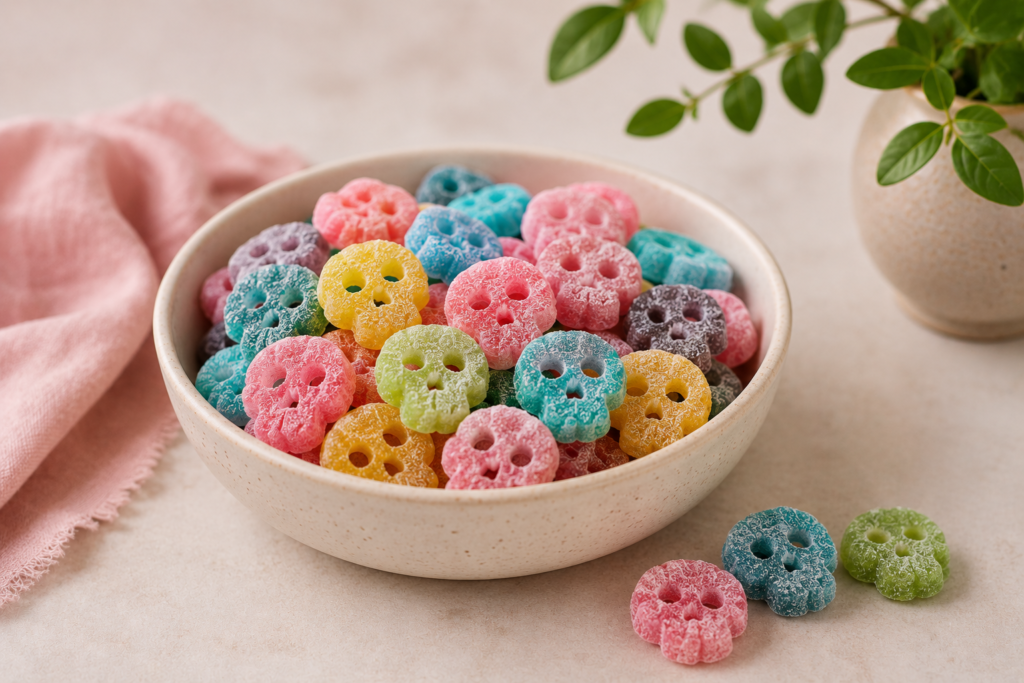
The result is that European candy looks more muted, sometimes almost pastel, compared to the vivid synthetic colors of American sweets. When guests see both side by side, the difference is immediately visible, and it prompts exactly the kind of comparison conversation you want the event to generate. 74% of consumers agree that confectionery is a fun and affordable luxury, and demand for premium imported and unusual flavor profiles is growing (National Confectioners Association). This event concept lives right at that intersection.
How to Select Your Geographic Regions
Try to find candies from four different regions, but focus on the unique aspects of each region. For East Asia, think about items with chewy textures or a low level of sweetness. Candy from Japan is often as much about the way it feels in your mouth and looks to the eye as the taste itself. You might consider items made with mochi, konpeito (which are tiny Japanese sugar stars), or fruit-flavoured hard candies. Korean and Taiwanese candy often feature roasted or grain notes, such as barley candy and sesame toffee as well.
Scandinavian candy is quite different from the others and comprises the world’s sourest and saltiest candies. This would fill in two categories right here: sour foam (sugar gummy and citric acid coated) and salty licorice. Additionally, candy from this area is often gelatin-free, so looking for vegan gummies based on pectin or starch might be a unique choice for this region.
For Western Europe, look for the most single-origin chocolate possible. Belgian and Swiss bars that come from a single source (Ecuador, Madagascar, Ghana, etc.) will notably taste different from each other, as each source’s unique combination of soil makeup, altitude, and fermentation will create a distinct profile.
And finally, Latin America infuses umami into its candy, providing the triple sensation of dried tamarind with salt and chili powder. Sour, salty, and tangy, yes, but also with an almost savory depth that surprises people who’ve only ever tasted sweet candy. The Japanese influence on Mexican candy (e.g., mango with chamoy) is most evident here.
The Blind Tasting Round
Running a blind tasting roughly in the middle of your evening, after the European section and before the Scandinavian round usually works well.
Either ditch the packaging or wrap individual pieces in foil. Strip any visual branding. Provide scorecards, more on those below, and have your guests write down their ratings before you reveal what they were eating.
This is always the most interesting round. That guy who brags he only eats 85% cocoa solids from Belgium, watch as an obscure, artisan, small-batch candy beats his brand-name pick in a blind test. Even your most committed licorice-loathing friend will cautiously grant a mild licorice drop a few points when she doesn’t know what she’s eating. Sensory bias is real, and the blind round lays it out there in the most fun way possible.
Palate Cleansers Between Rounds
Between each type of candy, give your guests a real palate cleanser. Room-temperature bubbly water is better than flat; the mild carbonic acid helps scrub any residual sugar films off your tongue. Unsalted crackers will absorb that gelatin and fat coating. Tart green apple slices will cut right through the residual sweetness, plus they don’t leave their own strong flavor behind.
Give people two to three minutes between rounds. You want the candy to hit a clean palate, not just pile on top of whatever’s come before.
The big one to watch out for is flavor migration. Mint, eucalyptus, and anything anise-adjacent will subtly contaminate more subtly flavoured sweets if they’re stored together or loaded up right after them in your sequence. Keep those apart in storage and on your serving surface.
Portion Control and Presentation
Divide the larger gummies and chocolate bars into tasting portions that weigh about 10 grams each. That’s a single bite, more or less, which is enough to rate properly without obliging yourself to eat an entire serving. Serve each portion in a labelled ramekin or a small ceramic dish.
Visually, and practically, a charcuterie-style tasting board works best. Cluster the candies in regional groups, label each section, and keep all the small, separated portions easy to grab. You don’t want the bags in the middle of the table. The second people are pouring out their snacks, you’re just hosting a snack spread, not a tasting.
Being mindful of portions also means you’re not going to collapse from a sugar coma at the end of the night. 20 to 25 candies in four regions at 10 grams each will roughly be the same total amount of sugar as three candy bars. Entirely manageable.
Temperature and Storage the Day Before
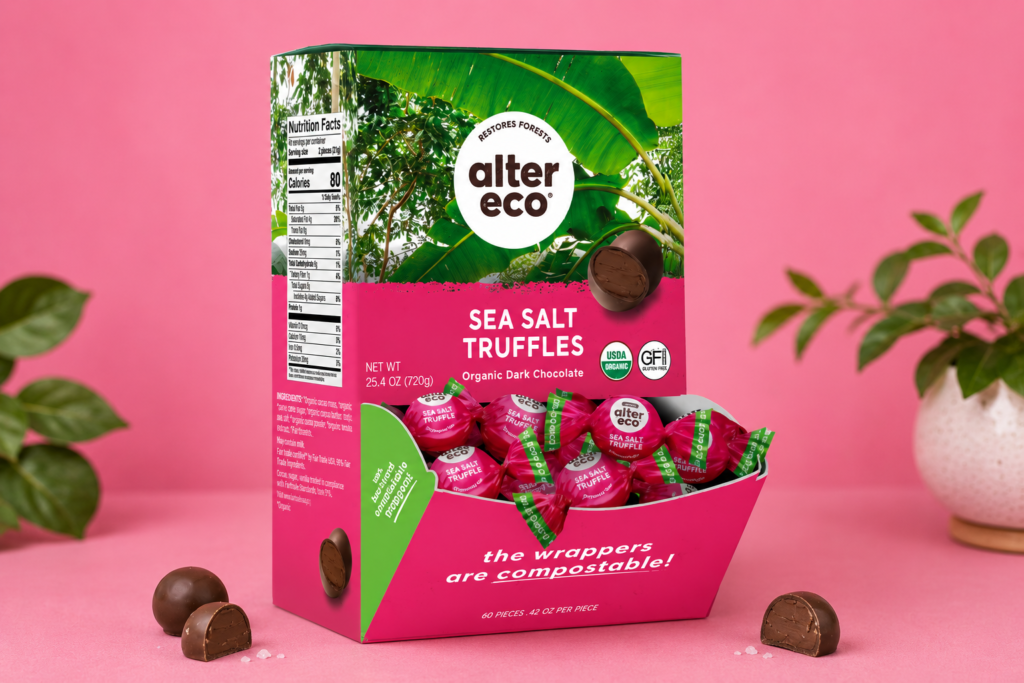
Chocolate should be kept cool, at a stable temperature not far above 65°F. If it becomes warm to the touch and then cools again, the cocoa butter rises to the surface and forms fat bloom: a gray-white streaky film. This does not affect the taste of the product, but it does affect the mouthfeel and gives the impression that the product is old or has been mishandled. Guests can and do notice this, so the evaluation of the product changes.
Scandinavian sugar-dusted gummies are especially sensitive to moisture. In a humid environment, the sugar will absorb moisture and become tacky, causing the individual pieces to stick together. Store them in an airtight container with a silica gel desiccant if the kitchen or storage is particularly humid.
Hard-boiled candies from anywhere are the opposite: you should keep them cool and dry. They do not have the same stringent temperature requirements as chocolate, but if kept in a warm, humid environment, they will weep and become sticky to the touch.
The Scorecard
Provide each guest with a card with five criteria, each judged on a 1-5 scale:
Visual appeal and packaging; Aroma; Initial texture and mouthfeel; Mid-palate flavor development; Aftertaste length
Five criteria, five points each, twenty-five points possible per candy. Add scores up post-blind and then again at the end of the full event. You’ll almost always notice higher or lower scores once the cover comes off, which is an interesting bit of information about how much packaging plays a role in perceived flavor.
Making it Repeatable
The beauty of this format is that once you’ve done the legwork, you can apply themes to future editions: Japanese only, chocolate-origin flights, retro confectionery from different decades, vegan-only line-ups using gelatin-free European formulations. The format remains consistent. The geography changes.
Candy is accessible in a way wine isn’t: low cost per serving, increasingly easier to source, and the global variety is truly enormous. The only missing component was a format that treated it with respect. Now you have it.
This blog post is part of ‘Blogaberry Dazzle’ hosted by Cindy D’Silva and Noor Anand Chawla in collaboration with Tanvi Agarwal.






 @wordsmithkaur
 @wordsmithkaur



I have never explored candy in such a detailed manner. I may not host a party, but I shall certainly try all the candies, especially the chili-tamarind. That is my fave flavour.
wowwww, never came across something this sweet through words.
The candies look so cute. This post would be too tempting for my daughter. This idea can be a incorporated in birthday parties.
So much goes into this candy party! Never heard of it and hence a nice-to-know from my end
This was an interesting post. I haven’t been to this kind of tasting but sounds interesting to try
Not a candy person but the vibrant colours and flavours are sure to make one want to attend a candy party soon!
What a fabulously original idea! Treating candy with the same seriousness as a wine tasting, complete with a flavor runway and scorecards, is such a fun concept. The tip about sequencing from soft East Asian sweets up to the chili-tamarind Mexican peak is genius; I’d never have thought about palate order with candy. And the blind round sounds like where all the delicious drama unfolds! Bookmarking this for our next family get-together.
What a fun idea! A candy-tasting party at home sounds like such a sweet way to spend time with friends and family.
Wow this is something I really knew nothing about -starting from international candy tasting parties to the different types of candy and the order in which to taste them. Very interesting.
The international candy tasting idea is such a fun way to bring everyone together. Loved the playful concept and the easy party inspiration. Perfect for creating sweet memories at home!
This is such a genius concept, treating candy tasting like a proper wine or cheese flight never occurred to me before! I love the idea of the blind tasting round exposing sensory bias, that sounds like it would spark such fun conversations. The tip about flavor migration with mint and licorice is such a smart detail too. Definitely bookmarking this for my next get together.
This sounds like such a fun idea! I love how something as simple as trying candies from different countries can turn into a little experience at home. Definitely adding this to my list of things to try, especially with family or friends!
Candy tasting party? Wow! Never heard of it and sounds so much fun. There’s so much to hosting this party…amazing, Harjeet!
I absolutely loved this idea because it turns something as simple and nostalgic as eating candy into a fun little journey around the world. The idea of tasting sweets from different regions, doing blind rounds and actually paying attention to flavour, texture and aroma makes it feel much more experiential than a regular candy party. As someone who loves discovering different cultures through food, I’d definitely be tempted to host one of these myself!